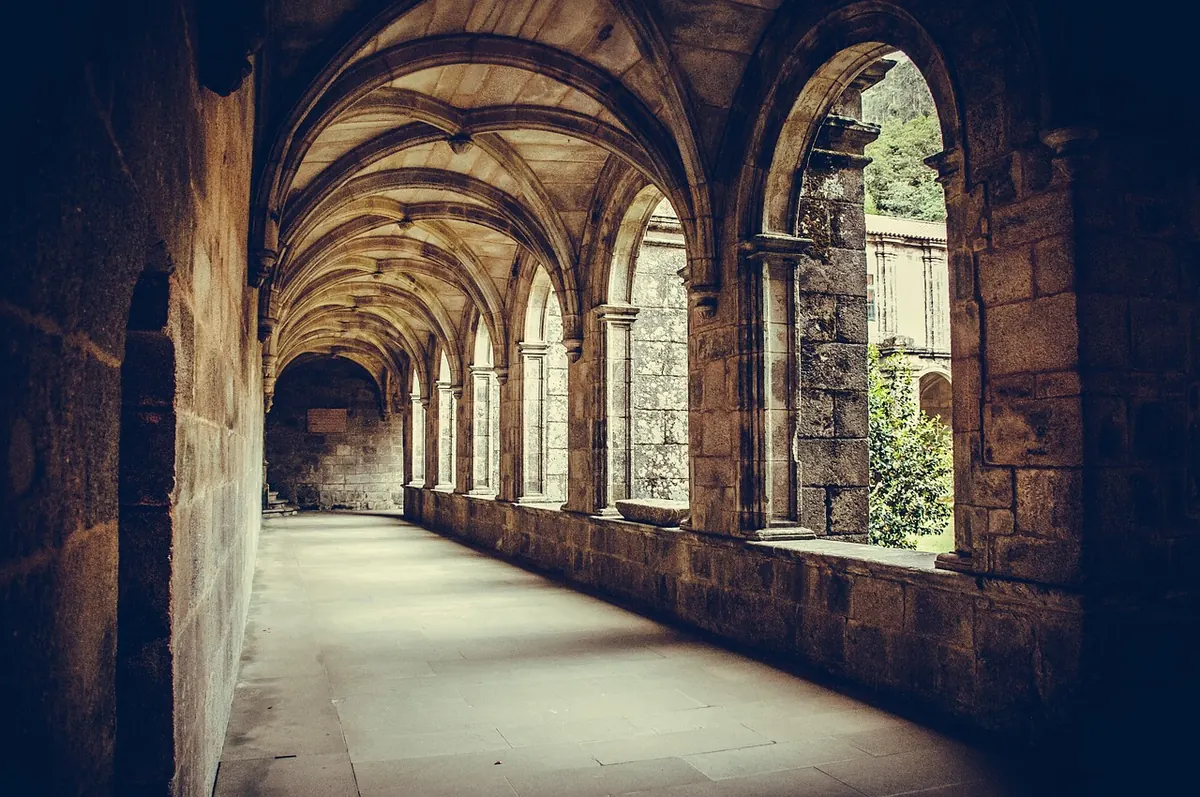
Monks have spent centuries treating time as something you shape rather than something that happens to you. Their days are built from a handful of habits — prayer at fixed hours, deliberate silence, work done with the hands — and none of those habits require a cloister, a vow, or a heroic personality. They require repetition. You can borrow the structure without borrowing the cell.
Why Monastic Habits Translate So Well
Monastic communities are often described as escapes from the world. They are closer to laboratories: places where a few simple practices get tested across decades, and the ones that don't work get quietly dropped. What survived is unglamorous. Set prayers. Quiet. Chores. Reading done slowly enough to change you.
These practices survived because they work on ordinary human material. They don't depend on a rare mood or a rare talent. A nurse on a night shift, a student in a shared flat, and a parent of small children can each keep some version of them.
There's a useful corrective here too. Much contemporary spiritual advice aims at intensity — the retreat, the breakthrough, the dramatic shift. Monasticism aims at continuity. A monk who prays badly for forty years is doing something a weekend of peak experience cannot replicate.
Fixed Prayer: Keeping an Appointment You Don't Reschedule
Monks pray at set hours, from early morning through evening. The details vary, but the principle doesn't: the hour decides, not the feeling. You show up at the appointed time whether or not you're inspired, and over months the showing up becomes its own form of faith.
For most people, two anchors is plenty — one in the morning, one in the evening. Ten minutes each. A starting sequence:
- Choose two times you can genuinely keep, like 7:10 a.m. and 9:30 p.m. Not the times you wish you could keep.
- Attach them to something that already happens — after coffee, before brushing your teeth, once the kitchen is cleared.
- Decide the content in advance so you aren't improvising: a psalm, the Lord's Prayer, a short passage, or a few minutes of silence with one sentence held in mind.
- Keep the same place. A chair, a corner, the end of a table. Place does a lot of the work.
- When you miss, resume at the next hour. Don't stack missed sessions into a guilt pile.
That last point matters more than it sounds. Fixed prayer is a rhythm, not a debt.
Silence: Not the Absence of Noise but the Absence of Filling
Monastic silence isn't a vow of muteness or a retreat from people. It's a discipline of not filling every gap — with commentary, input, opinion, noise. The purpose is to make room for what only becomes audible when you stop talking over it.
- Leave the first twenty minutes of the day unplugged: no news, no feeds, no podcasts.
- Take one walk a week without headphones.
- Eat one meal a week without a screen.
- Try a slow-reply habit: when you feel the urge to answer immediately, wait an hour and see if your answer changes.
- Sit in a quiet room for five minutes doing nothing at all. Not a technique — just sitting.
Expect the first attempts to feel uncomfortable and unproductive. That discomfort is usually the sound of a mind that has been overfed on input.
Manual Work: Prayer With Your Hands
The old monastic motto, ora et labora — pray and work — treats labor as a spiritual practice rather than an interruption of one. Washing floors, kneading dough, weeding a bed, chopping vegetables, fixing a hinge: work that is repetitive, useful, and unobserved does something thinking cannot.
Try this. Pick one task a day, however small, and give it your full attention. No podcast, no phone on the counter, no rehearsing the rest of your day in your head. Notice texture, weight, temperature, the sound of the thing. When your mind wanders, bring it back to the task. Twenty minutes is enough.
Manual work also corrects a specific imbalance. A great deal of modern labor happens inside the head and leaves nothing visible behind. Hands-on work gives the day a finished edge. You can see what you did.
Reading Slowly, and Fasting From More Than Food
Two supporting practices round out the toolkit.
The first is slow reading, traditionally called lectio divina. Instead of reading for information, take a short passage — a few verses, a page of a book that matters to you — and go through it several times with a different posture each time. Read it. Sit with one phrase that catches your attention. Respond to it in your own words. Then rest in silence with it. Fifteen minutes total. The aim is not to finish, but to be affected.
The second is fasting. Monks fast from food on certain days, and also from speech, from complaint, from comfort. You can fast from anything that has become compulsory: the phone in the first hour of the day, the scroll before bed, the reflex to comment. Pick one and drop it for a week to see what's underneath it.
A note on food fasting: skip it if you have a health condition, are pregnant, are recovering from an eating disorder, or take medication that requires regular meals. If you're unsure, check with a doctor before you start.
Write a Rule, Not a Wish List
A rule of life is a short written document stating what you will actually do. It is not a list of aspirations. It's closer to a schedule with a soul. Keep it to one page and include:
- Your two fixed prayer times.
- Your silence boundaries — for example, no screens before 8 a.m.
- Your daily manual task.
- One weekly slow reading session.
- One thing you're setting aside for now.
- A monthly review in writing: what held, what didn't, what to adjust.
Then leave it mostly alone. Monks don't reinvent their rule every week. They keep it long enough for it to work on them.
How to Begin This Week
Pick two practices, not six. Morning prayer and a silent walk, or evening prayer and one task done with full attention. Keep both for thirty days before adding anything. Put the times in your calendar with plain names so you see them without ceremony.
Expect to be mediocre at it. Monks are, too — that is rather the point of a rule. The practice doesn't require you to be good at it today. It requires you to be there tomorrow.
If you want to go further, look for a monastery near you or a lay oblate program. Many communities welcome guests for a few days, and a weekend inside the rhythm teaches more than any book about it.
Photo: MAGICBOIRO / Pixabay