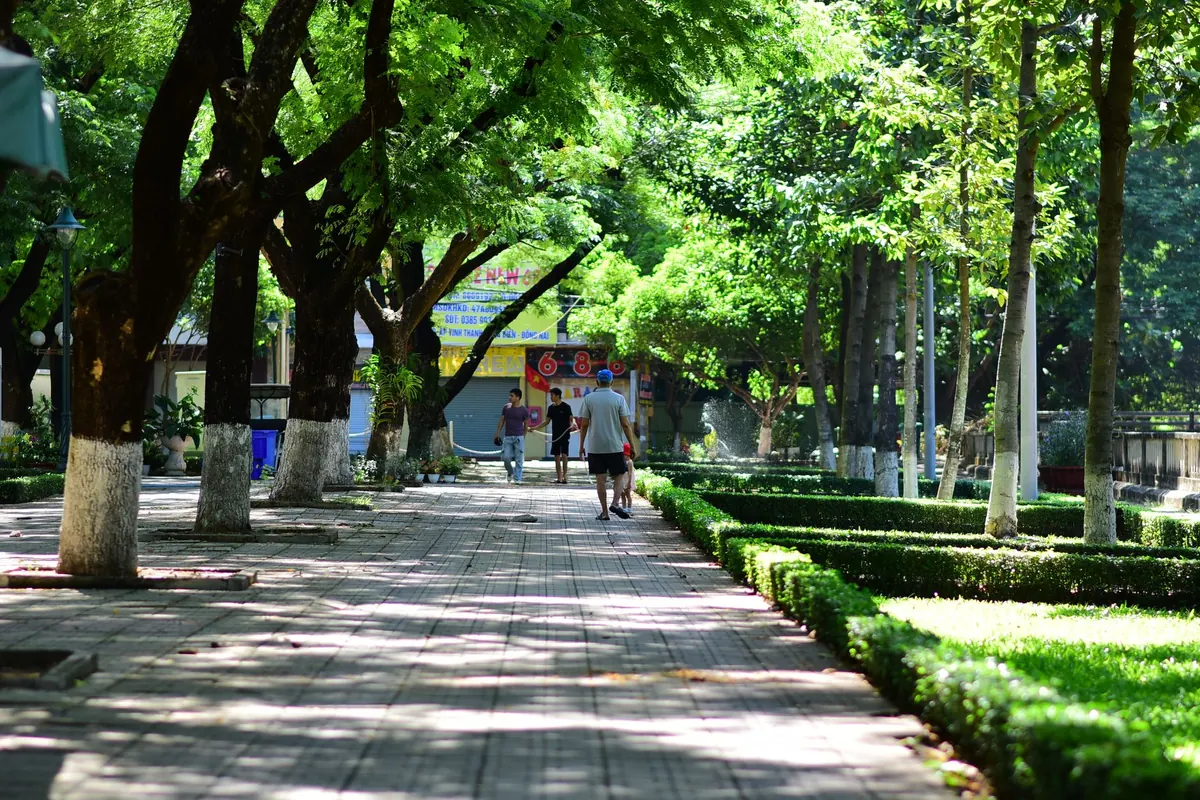
Most pilgrimages begin with a train ticket, a passport, a list of hostels. This one begins at your front door. Within a few miles of where you sleep there is a church left unlocked at midday, a hospital chapel nobody visits on Tuesdays, a walled garden behind a museum, a cemetery older than the streets around it, a bench facing the water at exactly the right hour. A local pilgrimage is the decision to walk to those places on purpose, in a chosen order, slowly enough to notice what the walking does to you.
It is not a lesser version of the real thing. Santiago and Kyoto have their own gravity, but the mechanics of pilgrimage — intention, route, arrival, return — work anywhere. What follows is how to find the sacred ground you already live beside, and how to shape it into a route worth walking more than once.
What Counts as Sacred Ground
A place does not need official sanction to hold you. What matters is that it gathers your attention and refuses to let it scatter. Sacred, in practice, is a quality of encounter rather than a category of real estate.
Some places are sacred by inheritance: consecrated ground, a shrine, a temple, a churchyard with three centuries of burials in it. Others are sacred by repetition. The bench where you sat every week while your father was dying. The bridge where you stopped, for no reason you could explain, and decided to change something. Nobody blessed that bridge. It became holy because you kept showing up.
Build a route that holds both. The inherited sites give you tradition and the company of everyone who prayed there before you. The discovered ones give you your own history, which is the part of a pilgrimage easiest to walk past.
Reading Your City for Sacred Places
Start with a paper map of your area, the kind you unfold on a table. Apps are useful later; on paper you can see the whole territory at once and spot clusters. Mark anything that looks like it might hold quiet. Then widen the list.
- Worship spaces of any tradition. Parish churches, a mosque with a courtyard, a synagogue, a Friends meeting house, a Buddhist centre above a dry cleaner, a gospel hall with a hand-painted sign.
- Liminal places. Cemeteries, war memorials, the stump of an old cross, a well, a footbridge, the fragment of a cloister built into a car park.
- Green refuges. Botanic gardens, allotments, a courtyard with one tree and two chairs, a riverside path, a nature reserve behind an industrial estate.
- Institutional chapels. Hospitals, universities and airports often keep small chapels open to visitors during set hours.
- Quiet civic rooms. Reference libraries, the older galleries of an art museum, a reading room with a clock that ticks.
- Personal markers. The house where you were born, the spot where you said goodbye, the corner where you stopped drinking. These belong on the list even when they are ugly.
Check before you go
Many churches are locked except for services. Some post a keyholder's number on the door; others list visiting hours online. A quick phone call saves a wasted mile. While you are checking, note the practical things: benches, toilets, drinking water, whether the path is lit after dark, whether a gate closes at a fixed time.
Keep notes like a surveyor
After each scouting walk, write down what you noticed. Which place made you stand still? Which one felt like nothing? Two or three sentences per stop is enough. You are not writing for an audience. You are learning what your own attention responds to.
Building the Route
- Choose a shape. A loop is easiest — it ends where it started and you leave the car at home. An out-and-back suits a single destination. A line, walked between two points with a bus home, carries the finality of a real journey.
- Pick three to five stops. More than that and the day becomes a commute between moments. Fewer and the route has no rhythm.
- Put the weight in the middle. The most demanding stop — the cemetery, the shrine, the difficult street — belongs in the middle third, when you are warm and unhurried, not at the end when you are thinking about dinner.
- Walk it once without ceremony. The first pass is reconnaissance. Notice where the pavement vanishes, where the noise is unbearable, where you would want water.
- Add a ritual. A psalm, a poem, ten minutes of silence, a stone carried and left, water poured at the last stop. Something small and repeatable. Ritual is what turns a walk into a pilgrimage.
- Name the route. Write it down with a title. The Three Bridges Walk. The Wednesday Loop. A named route is one you will return to.
Walking It Well
Move at the pace at which you can hear your own footsteps. That is slower than a commute and faster than a museum. Allow fifteen to twenty minutes at each stop, which will feel excessive the first time and about right the third.
Decide in advance whether this is a talking walk or a silent one. Both are good; they are not the same walk. If you bring a friend, agree on the terms before you set out, or one of you will spend the afternoon managing the other's expectations.
Put the phone on aeroplane mode for the middle section. Carry water, a layer against weather, a notebook and pen, a little cash for a donation box or a cup of tea, and a paper map in case the battery dies. If you have a heart condition, joint trouble, or you are returning to walking after a long break, check with a doctor before planning a long route. A pilgrimage is not meant to be an injury.
Etiquette and Boundaries
Some stops on your route belong to communities actively using them. Behave accordingly.
- Do not walk into a service in progress. Check times and visit between them, or sit at the back and follow the room's lead.
- Dress with the care you would bring to a funeral. Cover shoulders, remove hats indoors, take off shoes where it is customary.
- Ask before photographing. Never photograph people praying, and never photograph a burial.
- In cemeteries, stay on the paths, keep your voice down, and leave the flowers alone.
- If a place is closed to visitors, accept it. Some sacred ground is for its own people.
The rule underneath all of them is simple: you are a guest, not an audience. The difference shows in how you cross a threshold and where you put your hands.
Making It a Practice
One route walked four times a year will change more in you than four routes walked once. Walk the same loop in February and in June and the place will say something different both times. Add one new stop each year. Keep a small log, even a page per walk, with the date, the weather, and one line about what you carried and what you put down.
You may end up keeping two or three routes: one for grief, one for gratitude, one for the weeks when a decision will not settle. Use them the way you would use a tool. Then, once, invite someone along and let them see your city the way you have learned to see it.
The pilgrimage you have been meaning to take is closer than the airport. It starts at the end of your road, and it is waiting for a free Saturday morning.
Photo: Sóc Năng Động / Pexels