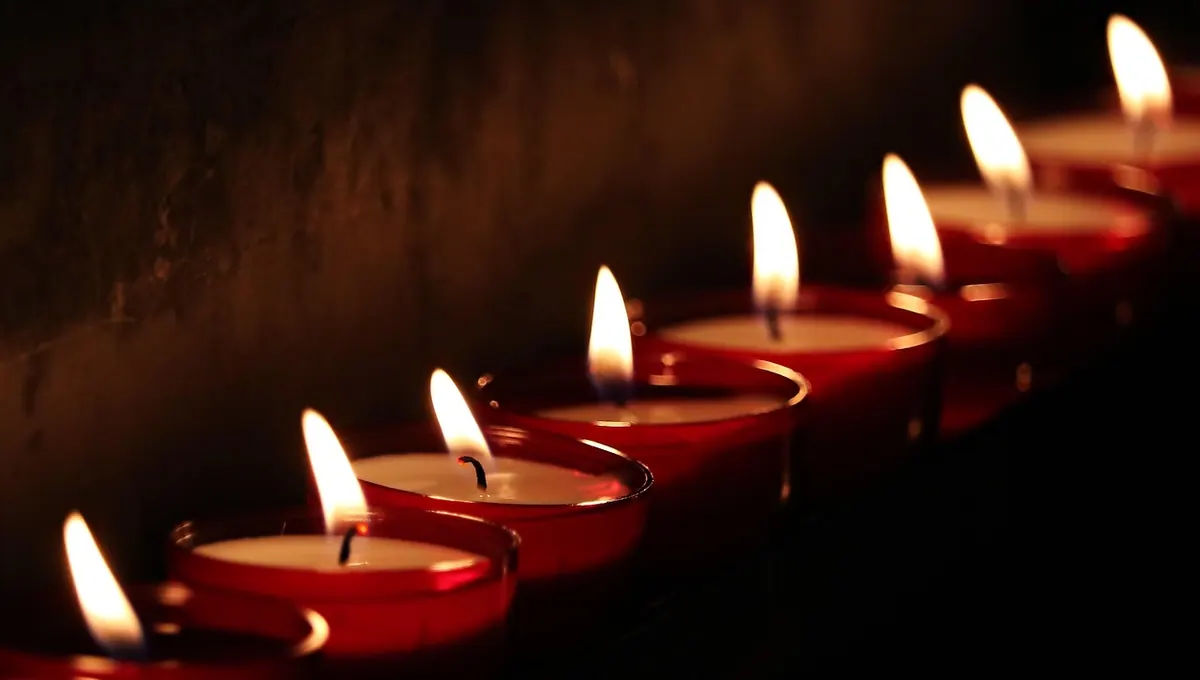
You sit down, close your eyes, and put your attention on your breath. Ten minutes later you feel steadier. But what you were actually doing depends on the tradition you walked in with. One practice teaches you to observe your thoughts without being dragged along by them. The other teaches you to hand those thoughts over to someone. That difference sounds minor on a Tuesday morning. Over ten years, it shapes everything.
Two Traditions, Two Starting Points
Christian contemplative prayer
Contemplative prayer is the long, quiet branch of Christian practice: desert hermits repeating a single verse, monks praying the Jesus Prayer on a knotted rope, Carmelites sitting in silence, ordinary people praying Centering Prayer for twenty minutes before the household wakes up. Its aim is not calm. Calm is often a byproduct. The aim is communion — being present to God, who is already present to you.
Methods vary, but they tend to share a shape. Lectio divina reads a short passage slowly through four movements: reading, reflecting, responding, resting. The Jesus Prayer repeats a single line, often coordinated with the breath. Centering Prayer chooses one sacred word as a gentle anchor and returns to it whenever you notice you have drifted.
"Be still, and know that I am God." — Psalm 46:10
Secular mindfulness
Mindfulness as it is taught in clinics, workplaces, and apps is a stripped-down practice: paying attention to the present moment on purpose, without judgment. It grew largely out of Buddhist meditation — Theravada insight practice, Zen — and was reshaped for people who do not hold those beliefs. The standard exercises are the body scan, breath awareness, and open monitoring, where you notice sounds, sensations, and thoughts as they arise.
The Goals Are Not the Same
Mindfulness usually aims at something in this life. It is offered as a way to lower stress, work with anxiety, sharpen focus, or meet difficulty with more steadiness. Those are real goods, and they show up in weeks rather than years.
Contemplative prayer is oriented toward relationship and, in Christian language, the transformation of the person — what the tradition calls sanctification, or growing toward union with God. Progress is not measured by how you feel at minute nineteen.
The practical difference shows up when practice gets hard. Stop meditating for a month and the benefits fade. Stop praying and nothing appears to be lost, which is precisely why contemplatives keep going anyway. You do not abandon a friendship because a visit felt flat.
Methods Side by Side
- The anchor. Mindfulness: the breath, sounds, physical sensations, whatever arises. Contemplative: a sacred word, a short prayer, a scripture phrase, or the person of Christ.
- What you do with thoughts. Mindfulness: notice, name, let it pass, return. Contemplative: notice, release, return — often with a small act of trust, a turning toward God.
- The stance. Mindfulness: non-judging observation, curiosity, acceptance. Contemplative: receptivity, humility, willingness to be changed.
- Time and posture. Both usually involve sitting for ten to thirty minutes, eyes closed or lowered. Centering Prayer is often twenty minutes twice a day; mindfulness sessions are typically shorter and more flexible.
- Language. Mindfulness avoids metaphysics so that anyone can use it. Contemplative prayer is addressed to Someone.
Where They Overlap
A great deal, honestly. Both require you to sit still when you would rather not. Both teach you that a thought is not a command. Both carve out silence in a life that rarely has any. A Christian praying Centering Prayer and an atheist following the breath look nearly identical from across the room.
That overlap explains the confusion and the borrowing. Many churches now teach contemplative practice with secular vocabulary — attention, presence, grounding — to make it approachable. Many mindfulness programs quietly rely on a posture of reverence they never name.
Where They Pull Apart
The self
Mindfulness often speaks of observing the self, of noticing thoughts as events rather than truths. Contemplative prayer speaks of offering the self, of being known and loved. One loosens your grip on your inner commentary. The other asks who has been holding it all along.
Effort and grace
Mindfulness is a skill. You improve with repetition, and the improvement is yours. Contemplative prayer treats practice as necessary but never sufficient. You show up; God does the work. That is why contemplatives can endure distracted, dry decades without concluding the practice failed.
The destination
Mindfulness is content to leave ultimate questions open. Contemplative prayer cannot. It points toward God, and it is judged by faithfulness rather than by the quality of your concentration.
Can You Practice Both?
Yes. Plenty of people do. The key is knowing which one you are in when you are in it.
- Name your intention before you begin. "For the next twenty minutes I am practicing mindfulness" is a different statement from "I am sitting with God."
- Pick one frame per sit. The mind produces enough confusion on its own without you switching traditions halfway through.
- Let skills cross over, not goals. Noticing tension, releasing a train of thought, returning to your word — these work in both. The purpose behind them does not transfer.
- Keep a teacher or community in your primary tradition. Books cannot see what you are avoiding.
- Watch for substitution. If prayer has quietly become a stress-management technique, the goal has moved without your permission.
One caution worth stating plainly: silent practice of any kind can surface difficult memories or anxiety. If you live with trauma or a mental health condition, speak with a doctor or therapist about how to practice safely. Not because stillness is dangerous, but because it deserves support.
A Simple Way to Begin This Week
If you would rather feel the difference than read about it, try two ten-minute sits on separate days. On day one, practice plain breath awareness: no religious content, just noticing and returning. On day two, use a single sacred word or the Jesus Prayer, said gently, returning each time you drift.
After each sit, write one sentence answering this: what was I doing with my attention? Day one may produce something like "watching my mind." Day two may produce "keeping company." Both are worthwhile, and neither cancels the other. But only one of them is prayer, and knowing which one you are doing is the whole point.
Photo: NoName_13 / Pixabay