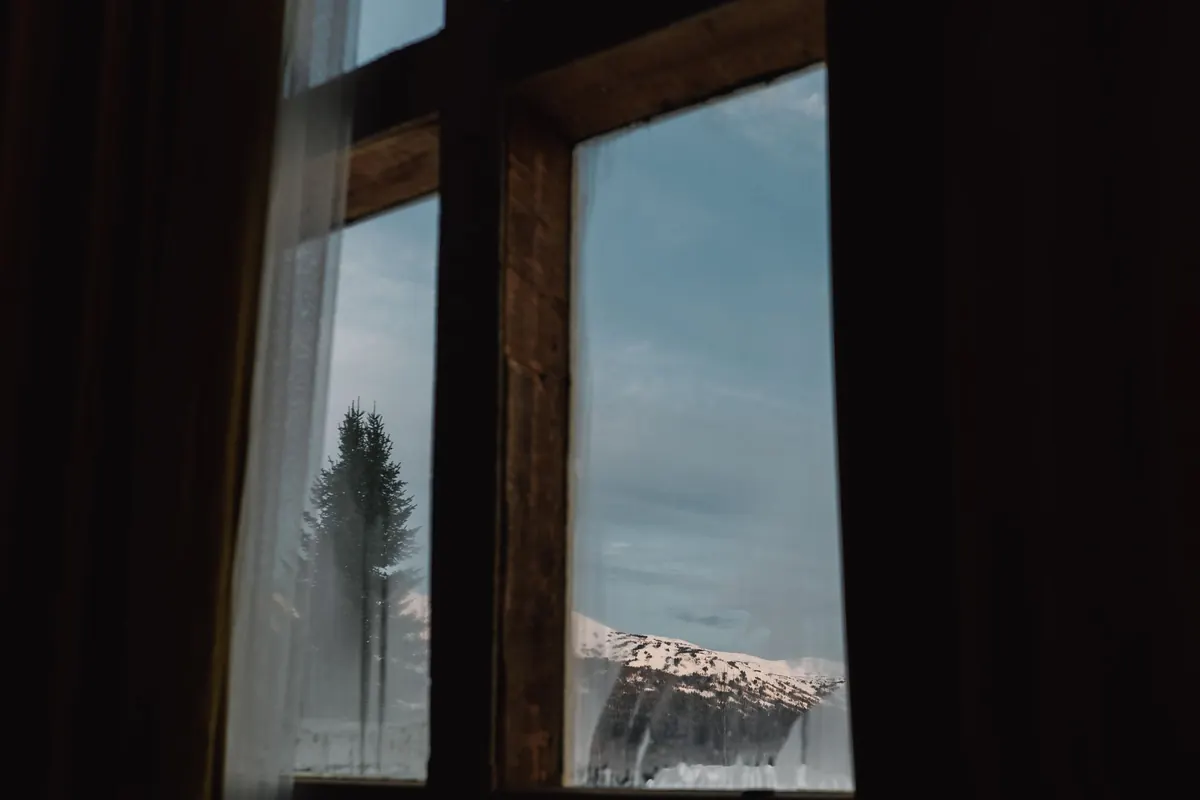
By four in the afternoon the light has gone soft and grey, and something in you wants to argue with it. Turn on more lamps. Add another commitment. Keep the pace you kept in June.
Winter makes a different suggestion. The season's long dark is not an obstacle to your spiritual life; it is one of its teachers. Every tradition that has kept a calendar of prayer has noticed the same thing: some seasons are for harvest and output, and some are for keeping a small fire and letting the roots do their unseen work. If your practice has felt thin since the clocks changed, the problem may not be your discipline. It may be your calendar.
Why the Dark Is Worth Keeping
Most of us treat darkness as a problem to be solved with electricity, and that habit follows us into prayer. We want brightness, clarity, quick results. But the older rhythms of worship lean the other way. The church's day begins in the evening. Night prayer, the last office before sleep, is the simplest and least wordy of them all. Advent and Lent both ask us to wait in the dark rather than switch it off.
That is not gloom for its own sake. Darkness lowers the volume on the world so that smaller things become audible: a question you have been avoiding, a grief you have not named, a gratitude that only surfaces when you stop moving. Treat winter as a season of reduced output rather than failed output, and the guilt loosens its grip.
Slower Prayer: Fewer Words, More Room
If your usual prayer is a list, winter is a good time to shorten it. Not because petition is wrong, but because a shorter prayer prayed slowly does something a long one cannot.
Try this shape, ten minutes end to end. Sit down. Let your shoulders drop. Say one line, quietly, three or four times, until the words stop being a sentence and start being a place you are standing.
Out of the depths I cry to you, O Lord.
Then read one psalm, slowly enough that you notice where you stumble. Sit in silence for two or three minutes. Close with the same line you began with. That is the whole thing. Do it for a week before you decide whether it is working, and try not to grade it by how it felt.
A breath prayer for short days
If sitting still is hard, pair a phrase with your breathing. On the inhale, Lord, have mercy. On the exhale, I am here. Five minutes of that on a dark commute counts.
Silence You Can Actually Sit With
Silence is easy to praise and difficult to practise, mostly because we attempt too much of it at once and then conclude we are bad at it. A few adjustments make it workable:
- Start with five minutes, not thirty. Consistency beats duration every time. Five minutes daily for a month will change more than one long, heroic hour.
- Anchor it to a fixed cue. After the dishes. Before the first email. Immediately after you turn off the last light.
- Empty your hands first. Keep a notebook nearby and write down the three things circling your mind. They will still be there in ten minutes.
- Give your body something to do. A candle to watch, a bead to move, a cushion to sit on. Stillness of mind often follows stillness of posture.
- End with a word, not a resolution. A single "thank you" is enough. You are not closing a meeting.
Expect the first several minutes to be restless and dull. That is not failure; that is the noise settling. The point of silence is not to feel peaceful. It is to become available.
Rest as a Spiritual Practice
Sleep is not the opposite of prayer. It is one of its conditions. You cannot be attentive on a chronic deficit, and no amount of devotional effort compensates for a body that is running on empty.
Winter gives you permission to sleep more than you do in summer, and there is nothing lazy about taking it. Go to bed earlier than feels justified. Get outside in the morning, when the light is strongest, even briefly. Let your evenings be dim and quiet rather than bright and busy. If low mood in the dark months is persistent, disruptive, or frightening, that is a matter for a doctor, not just a devotional adjustment — seasonal patterns in mood are real and treatable, and seeking help is not a failure of faith.
When Winter Feels Heavy Rather Than Holy
Some winters do not feel restful. They feel like absence. Prayer goes flat, the silence feels less like room and more like a locked door, and every candle you light seems to gutter.
Two things are worth saying about that. First, dryness is not the same as distance. Many people who have prayed for decades describe long stretches of exactly this, and they are not describing a punishment. Second, dryness is not the same as illness. If you cannot get out of bed, if you have stopped eating or sleeping, if you feel hopeless most days, treat that as you would treat a broken bone: get help from a professional, and let your community carry some of the weight.
What helps in the merely dry seasons is almost embarrassingly small. Show up. Keep the five minutes. Tell one person the truth. Do not overhaul your entire spiritual life in January because one week felt barren.
A Winter Rule of Life
Rather than resolving to do more, write down a short rule for the season and keep it until the light returns. Four lines is plenty:
- One prayer, slowly. Ten minutes, same time daily, one psalm or one line.
- One silence. Five minutes without input, once a day.
- One early night. Choose a bedtime and hold it for the season.
- One person. Someone you tell how it is actually going, once a week.
Put it somewhere you will see it. Then review it when the days begin to lengthen, and adjust without scolding yourself. Seasons of prayer are like seasons of weather: the work is not to force spring, but to stay faithfully present in the cold, and to notice what grows there that could not grow in the sun.
Photo: Mikhail Nilov / Pexels