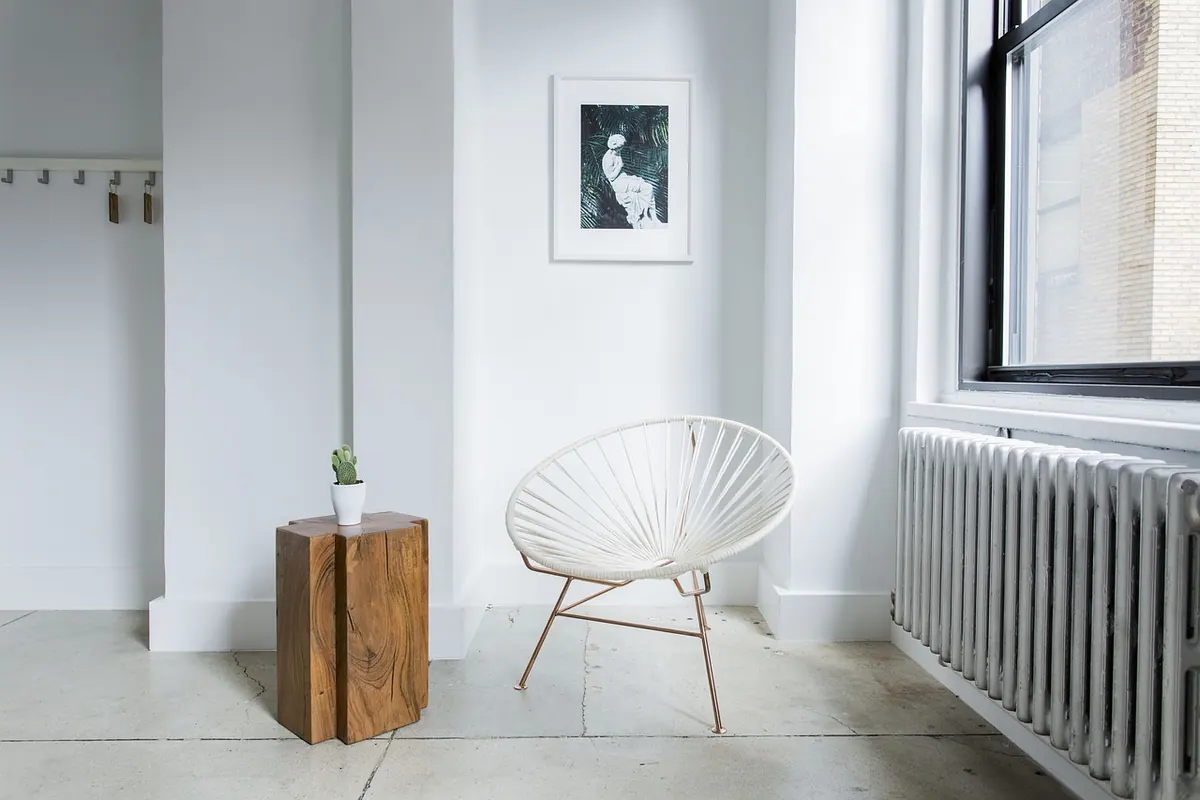
A prayer corner does not require a spare room. In a studio apartment or a shared flat, the strip of floor between a bookshelf and a window can hold everything you need: a small surface, something to sit on, and a few objects that mean something to you. The point isn't the furniture. It's having a place that is set apart, even by two feet, so that when you sit down there your body knows what you came to do. You can build one without crowding the rooms you already live in.
Find the Spot Before You Buy Anything
Look for a wall you face rather than a wall you walk past. You need enough floor for your knees or a stool, and a little distance from where you eat, work, or watch things — otherwise the corner quietly turns back into a living room.
Measure first. Good candidates in small flats: the end of a hallway wide enough for a chair, the corner beside a closet, a deep windowsill, the floor at the foot of the bed, a shallow closet with the door taken off its hinges, the bathroom if it is the only place nobody follows you. If your tradition includes facing a particular direction or toward a sacred image, work that in now rather than rearranging everything later.
Three Things, Then Nothing Else
You need a surface at roughly waist or chest height, somewhere to sit or kneel, and one object that holds your attention. That is the whole list. Everything past it is preference.
- The surface: a wall shelf, a nightstand, a stool set on its end, a shallow crate mounted to the wall, a windowsill, a tray that lives on the floor.
- The seat: a cushion, a folded blanket, a low stool, a kitchen chair borrowed from the table, a kneeling pad.
- The focal point: a candle, an icon, a small statue, a bowl of water, a plant, a stone from a walk, a book left open to a page you keep returning to.
Useful additions: a lamp that is not the overhead light, a mat or rug, a timer, a notebook, a shawl for cold mornings, a small bell. The test for any item is whether you touch it while you are there. If you never do, it is decoration — fine in itself, as long as it doesn't crowd out the practice.
Use the Wall, Not the Floor
Floor space is the scarcest thing in an apartment. Walls are not. A shelf mounted at eye level puts your focal point where you naturally look when you sit, and a corner shelf uses space that was doing nothing. A slim ladder shelf read from the side takes up less than a foot of depth. Hooks hold a hanging cloth or a shawl.
If you rent, removable adhesive hooks rated for the weight of what you hang will usually come off cleanly, though it is worth testing one in a hidden spot first. A tension rod with a simple curtain across the front of a bookshelf turns it into something that opens and closes, solving two problems at once: it holds your things and it hides them.
Make It Disappear When You Need To
When one room has to serve as bedroom, office, and kitchen, a permanent altar can start to read as clutter. Contained setups hold up better. Keep everything on a tray; when you pray, you set the tray on the floor or on a table you already own, and when you finish, it goes back on the shelf. A deep drawer, a lidded basket, or an old suitcase under the bed does the same job.
Furniture can double up. A wooden stool works as a seat and as a surface. A folding stool slides beside the refrigerator. A storage ottoman holds a cushion and a candle and gives you somewhere to sit.
If you share the apartment, say what the corner is for. A shelf a roommate knows is yours will usually be left alone. If your practice is private and the room is public, the tray method is the easiest answer — no explanation required.
Light, Sound, and Scent Do More Than Objects
Light
The single most effective change in a small room is turning off the ceiling light. One small lamp or a candle at low height makes a corner read as separate from everything else without moving a single piece of furniture.
Sound
A small bowl struck once, a chime, a speaker with one playlist you only use here — any of these signal to the body that the time has changed. If the street outside is loud, headphones are not cheating.
Scent, and the floor
Incense and candles are lovely and also a fire risk in tight spaces: keep flames away from curtains and paper, never leave them burning unattended, and check with the people you live with about smoke and scent sensitivity. A battery candle is a perfectly serious substitute. A mat or thin rug under your cushion marks the boundary on the floor and softens sound; in a small room, that rectangle does a surprising amount of work.
Keep It Simple, and Don't Let It Become a Shelf
The most common way a prayer corner dies is by accumulation: mail on the surface, a charger, laundry that needed somewhere to go. Two habits prevent it. The surface holds only what you touch during practice, and once a week you take everything off, dust it, and put back only what you actually used.
Rotate the focal point with the season — a candle in winter, a bowl of water when it is warm, flowers when they are cheap at the market, a different image for a different stretch of the year. Change keeps you looking at it. So does a plant, which will tell you plainly when it has been ignored.
Start With What You Have Tonight
Pick the spot, clear it, and put one object there. Sit for five minutes at the same time tomorrow. Add nothing for a week; if you have used the corner five times, you have earned the right to improve it. If you missed most days, the space is probably not the problem — try a different time of day before you try a different shelf.
Missing days is normal. The corner waits, and it isn't a rule you can break. It is a support, and some people pray best walking around the block. Keep the space because it reminds you; keep it small because it has to survive real life.
And if what you are carrying is heavier than a practice can hold — grief, anxiety, something that will not lift — a corner is a good companion but not a treatment. Talk to a doctor or a counselor as well.
Photo: StockSnap / Pixabay