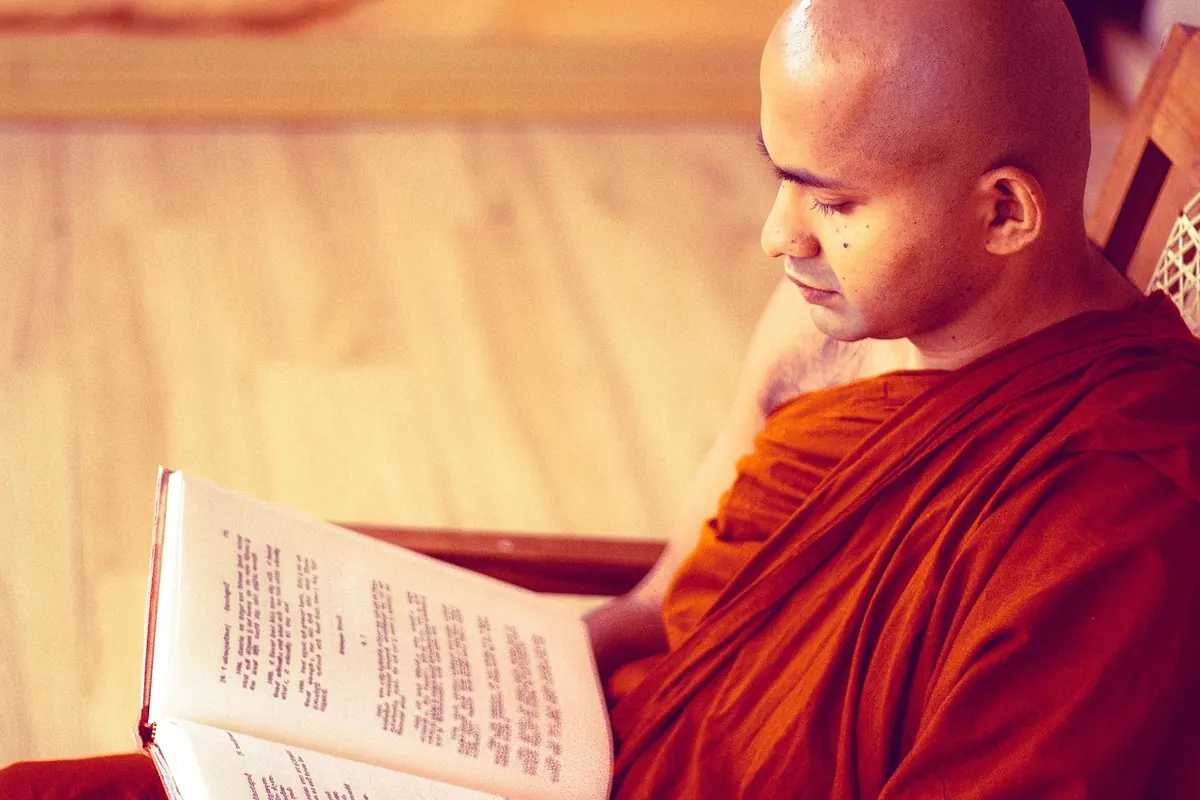
A monastery is not a machine for producing holiness, and it is not a self-improvement program with better architecture. It is a household of people who have agreed to stay with each other and with a set of practices long enough for those practices to change them. That distinction matters, because most of what circulates as monastic wisdom online is surface: candles, early rising, linen aprons. Underneath sits something sturdier, and much of it travels well. Some of it does not travel at all. Knowing the difference saves you years of trying to be a monk with a mortgage.
What Monasticism Actually Runs On
Strip away the architecture and a monastic house runs on a few interlocking parts. There is a rule — a short written document, not a mood. There is a rhythm: prayer at fixed hours, whether or not anyone feels like it. There is stability, the commitment to stay with these people and this place. There is work, usually unglamorous. And there is accountability, which in the Benedictine tradition takes the form of vows of stability, fidelity to the monastic way of life, and obedience.
Notice how much of that depends on other people. A rule needs someone to hold you to it. Obedience needs someone worth obeying. Fixed hours mean little when you are the only one keeping them. This is the hinge on which everything else turns: values transfer, structures mostly do not.
The Transferable Part: A Rhythm You Can Keep
The most portable monastic practice is the daily rhythm, and you can build a small one this week. Two anchor points are enough to start.
- Morning: fifteen minutes at the same time and in the same chair. A short passage of scripture or poetry, a few minutes of silence, one sentence of intention for the day.
- Evening: five minutes before bed, reviewing the day without grading it. What went well, what you avoided, what you would do differently.
That is it. The content matters less than the repetition. Monks do not keep the hours because the hours are thrilling; they keep them because a life needs a spine. Set a phone alarm that does not lead straight into email. Do not add a third hour until the first two have held for six weeks. Most practices die from ambition, not from neglect.
Stability, or Why You Should Stop Switching Practices
Modern spiritual life tends toward serial novelty. Six weeks of breath meditation, then a journaling phase, then a yoga studio membership, then a retreat, then nothing. Each switch feels like fresh commitment. Mostly it is a way of avoiding the long middle stretch where a practice stops being interesting and starts being yours.
Stability means choosing and then staying: the same cushion, the same congregation, the same two people who know what you are attempting. It means walking the same route often enough to notice the tree by the bus stop. Boredom is not the failure of a practice. It is usually the point at which the practice starts working on something you would rather not look at. If you have never been bored with a spiritual practice, you have not stayed with one long enough.
Two practical stabilizers
First, put a start date and a review date on anything new — "I will do this until March, then evaluate." Second, when you want to quit, tell the person who knows. Half the value of a vow, for people who cannot make vows, is simply announcing a plan out loud.
Silence You Can Practice Without a Vow
Monks do not mostly practice silence by never speaking. They practice custody of speech and custody of the ears: not saying the first thing that arrives, not filling every gap with input. You can run a version of this without a cloister.
- Keep the phone in another room for the first and last thirty minutes of the day.
- Take one walk a day without headphones.
- Try a week of not commenting on things that do not require a response.
- Notice the urge to reach for noise. It usually shows up right before something true.
Expect the first two weeks to feel like a mild withdrawal, because that is what they are. If the quiet starts bringing up more than you can hold, that is a sign to talk with a therapist or a trusted person rather than to push harder alone.
Work, Attention, and the Dishcloth
Monastic work is rarely impressive: kitchen, garden, laundry, repairs. What makes it prayer is not the task but the attention given to it. You can borrow the posture without borrowing the schedule. Wash the dishes without a podcast. Fold the laundry as one thing rather than three things while half-listening to a screen. Sweep a floor and finish it.
The test is simple: can you do one unglamorous task today, with no audience and no shortcut, and give it your whole attention for ten minutes? That is a small, complete act of the kind a monastery runs on all day. Done daily, it changes how you live with everything else, including the people you share a home with.
What You Can't Adopt Without a Vowed Community
Some parts of monastic life are not intensifications of ordinary practice. They are structures that only exist inside a group bound to each other by vows, under real authority, for life. Trying to replicate them solo produces something else — often something a bit fragile.
- Obedience to a superior. This requires a person with genuine authority who knows you well and whom you have freely chosen to obey. You cannot be your own abbot; self-imposed rules are suggestions with better branding.
- Common property and real poverty. Pooling money and possessions only means something among people bound to each other. Alone, it is frugality, which is fine but is not the same thing.
- The full daily office in choir. Fixed-hour prayer in its complete form assumes bodies in a room, singing and answering each other. You can pray the psalms alone; you cannot be a choir alone.
- Enclosure. A retreat, a quiet room, a phone-free weekend — all possible. Permanent withdrawal from the world requires a community that carries the practical weight of it.
- Celibacy as a vow. This is vocational, discerned within a tradition over years and tested with others. It is not a discipline to take up on your own initiative.
- Mutual correction. The least marketed part of community life: being told, by someone who loves you and whom you cannot block, that you are wrong. If this appeals to you, you are probably ready for a real community.
If that second list attracts you more than the first, the honest next step is not to build a private monastery in a studio apartment. Visit a monastery for a few days. Look into becoming an oblate or associate of a religious community, which lets laypeople bind themselves to a house's rhythm and values without vows. Join a congregation or a small committed group and stay for years.
Building a Rule You'll Actually Keep
A rule of life is not a plan for becoming excellent. It is a short, durable set of commitments that keeps your attention facing the right direction on ordinary Tuesdays.
- Write it on one page. Three items maximum to start. Prayer, work, and one relationship you will tend.
- Attach each item to something you already do. After coffee, before the laptop, on the walk to the station.
- Include one easy thing and one thing you resist. The easy one keeps the rule alive; the hard one keeps it honest.
- Plan for failure in advance. Missed a day? Resume tomorrow. No penance, no restarting the count.
- Review monthly, revise quarterly. Adjust — but resist the urge to rewrite the whole thing while you are still in the unglamorous middle of it.
- Tell one person what you are doing. This is the closest most of us come to a vow, and it does more work than any app.
Take the values. Leave the structures you cannot honestly carry. And if the whole thing starts to feel like a performance, cut it back until it is small enough to be true.
Photo: kalyanayahaluwo / Pixabay